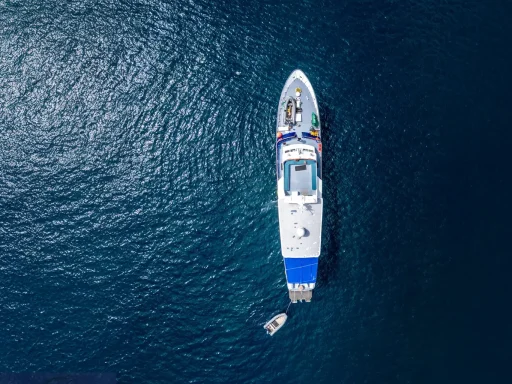
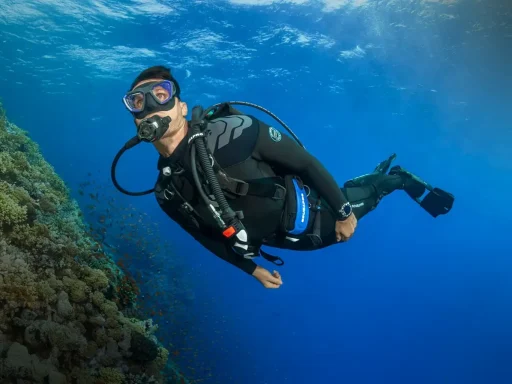
This new campaign is a blended, data-led media push designed to put liveaboards, river cruises, safaris and culturally immersive trips in front of travellers already thinking about their next major journey. Strong visuals are only part of the story. The structure behind the campaign is engineered to move viewers from initial awareness to measurable booking intent.
For a sector that traditionally leaned heavily on print, dive media and trade shows, this is a clear statement: mainstream broadcast and streaming TV can now operate as part of a performance funnel.
sdm quick take
- New US national TV ad campaign is live now
- Runs on streaming TV (CTV) and traditional linear TV via Comcast placements
- Target audience: affluent adventure travellers aged 45–65+
- Built with retargeting and layered audience data
- Creative includes 30-second and 15-second spots, supported by display follow-up
What’s launching and who it’s aimed at?
Aggressor Adventures has structured the campaign around a clearly defined demographic: affluent adventure seekers, broadly aged 45–65+, with both discretionary time and budget for higher-ticket travel.
The brand is not casting a wide net across casual holidaymakers. The focus is on travellers who already demonstrate interest in:
- Scuba and snorkelling-focused expeditions
- River cruising
- Wildlife safaris
- Culture-driven, destination-led itineraries
This is already a mature segment. These are travellers accustomed to researching extensively, comparing operators and planning well in advance. That reality shapes the marketing architecture.
Where the ads are running: streaming and linear TV
The campaign combines two distinct television environments:
• Connected TV (CTV)
Streaming placements target cord-cutters and streaming-first households. CTV allows tighter audience segmentation than traditional broadcast, enabling demographic and behavioural layering that aligns more closely with digital targeting models.
• Linear television
Traditional scheduled programming remains part of the mix. Linear still delivers reach, particularly within older, higher-income demographics that continue to watch appointment viewing.
Both channels are placed via Comcast, creating a unified buy across streaming and traditional distribution. The strategic logic is clear: reach scale without losing control over audience definition.
The strategy: targeting infrastructure first
The visual layer may be what the public notices. The operational layer is where this campaign differentiates itself. Rather than positioning TV as a top-of-funnel awareness-only channel, the campaign integrates:
Geo scaling
Market-specific weighting designed to expand strategically across higher-potential regions rather than deploying uniform national saturation.
Retargeting
Viewers who engage — whether through site visits or related digital behaviour — can be re-exposed to the brand via display and other digital placements, reinforcing recall during the research phase.
First- and third-party data
Audience modelling sharpens who sees the message and helps reduce wasted impressions, particularly critical when promoting premium-price travel.
For a high-consideration product category like liveaboards and expedition travel, the objective is sustained presence during the decision window, not a single emotional spike.
Why 15- and 30-second formats matter
Aggressor is deploying both 30-second and 15-second cuts, both important in the world of marketing.
- The 30-second format establishes tone, aspiration and narrative context.
- The 15-second version increases frequency and reinforces brand recall at lower incremental cost.
Used correctly, this staggered format strategy allows emotional positioning and practical reinforcement to coexist. It reflects a media plan built for repetition and conversion, not one-off branding.
A performance funnel built around TV
This campaign is structured in three layers:
- Awareness: Emotional pull and destination-led storytelling via national TV.
- Reinforcement: Digital retargeting to audiences who show signals of interest.
- Conversion support: Continued visibility during the research and comparison phase.
For the dive sector, this integration is notable. TV-led campaigns in this niche have historically been brand exercises. Here, television acts as the ignition point of a measurable acquisition system.
A legacy operator leaning into modern media
Founded in 1984, Aggressor has long been synonymous with liveaboard diving. What this campaign signals is a willingness to deploy contemporary advertising mechanics to extend that brand into a broader “adventure travel” category.
Liveaboard trips are rarely impulse purchases. Divers and expedition travellers often plan six to twelve months out, sometimes longer. Remaining visible across that entire window can materially influence booking behaviour.
Beyond liveaboards: the broader portfolio
While divers most readily associate the name ‘Aggressor’ with yachts and dive decks, the portfolio actually includes:
- Liveaboard scuba and snorkelling charters
- Luxury river cruises
- Wildlife safaris
That diversification allows cross-sell opportunities within households where not every traveller dives… a practical reality for many long-haul bookings and not something many other operators address.
Destination footprint
Aggressor operates across major global dive and expedition regions, including:
Caribbean and Atlantic
- Bahamas
- Belize
- Cayman Islands
- Roatan
- Turks & Caicos
Caribbean and Atlantic
- Bahamas
- Belize
- Cayman Islands
- Roatan
- Turks & Caicos
Pacific and Indo-Pacific
- Palau
- Philippines
- Thailand
- Indonesia
(including Raja Ampat and Komodo) - Maldives
Expedition-focused regions
- Galápagos
- Cocos Island
- Red Sea / Egypt
For experienced divers, these are established, high-demand itineraries. Increased national advertising typically correlates with elevated enquiry volume, particularly in peak seasons.
Practical implications for divers and operators
From an industry perspective, a national television push can have measurable ripple effects.
- Higher enquiry velocity: Increased mainstream visibility often compresses booking timelines for prime weeks.
- Competitive pressure: Other operators in similar regions may see indirect uplift or feel compelled to increase marketing activity.
- Mixed-interest household appeal: River cruises and safaris broaden the addressable audience beyond core divers.
For divers actively planning:
- Expect higher frequency exposure if you fit the target demographic.
- Monitor availability early for peak routes and seasonal windows.
- Compare inclusions, cabin categories and itinerary structures carefully — particularly as retargeting ads may surface promotional messaging repeatedly.
Advertising the dream vs. planning the logistics
Television campaigns sell aspiration. Operational reality still determines trip outcomes.
Before committing to any expedition or liveaboard itinerary:
- Confirm expected dive profiles and conditions.
- Review safety equipment carried onboard.
- Ensure training, experience and insurance align with the itinerary’s demands.
A marketing push does not change operational fundamentals — but it can accelerate decision timelines.
Industry perspective
The dive and expedition sector has historically been conservative in mainstream media deployment. A national CTV + linear campaign signals confidence in both brand equity and booking infrastructure.
For experienced divers and travel planners, the headline is not the creative. It is the structural shift: television, when paired with retargeting and data-layered segmentation, is now being used as a measurable acquisition channel in a niche that once relied almost entirely on trade and community marketing.
That evolution may prove more significant than the ad spots themselves.