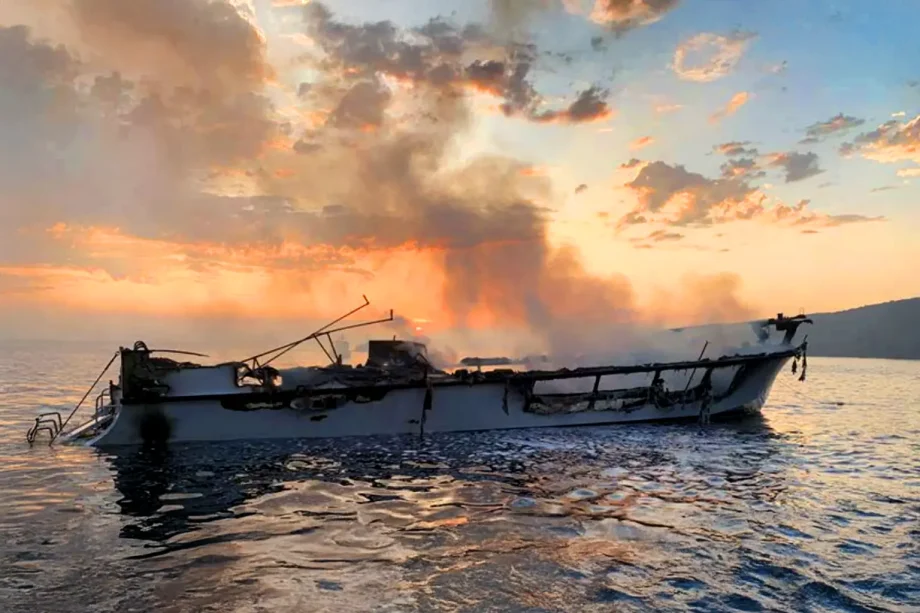
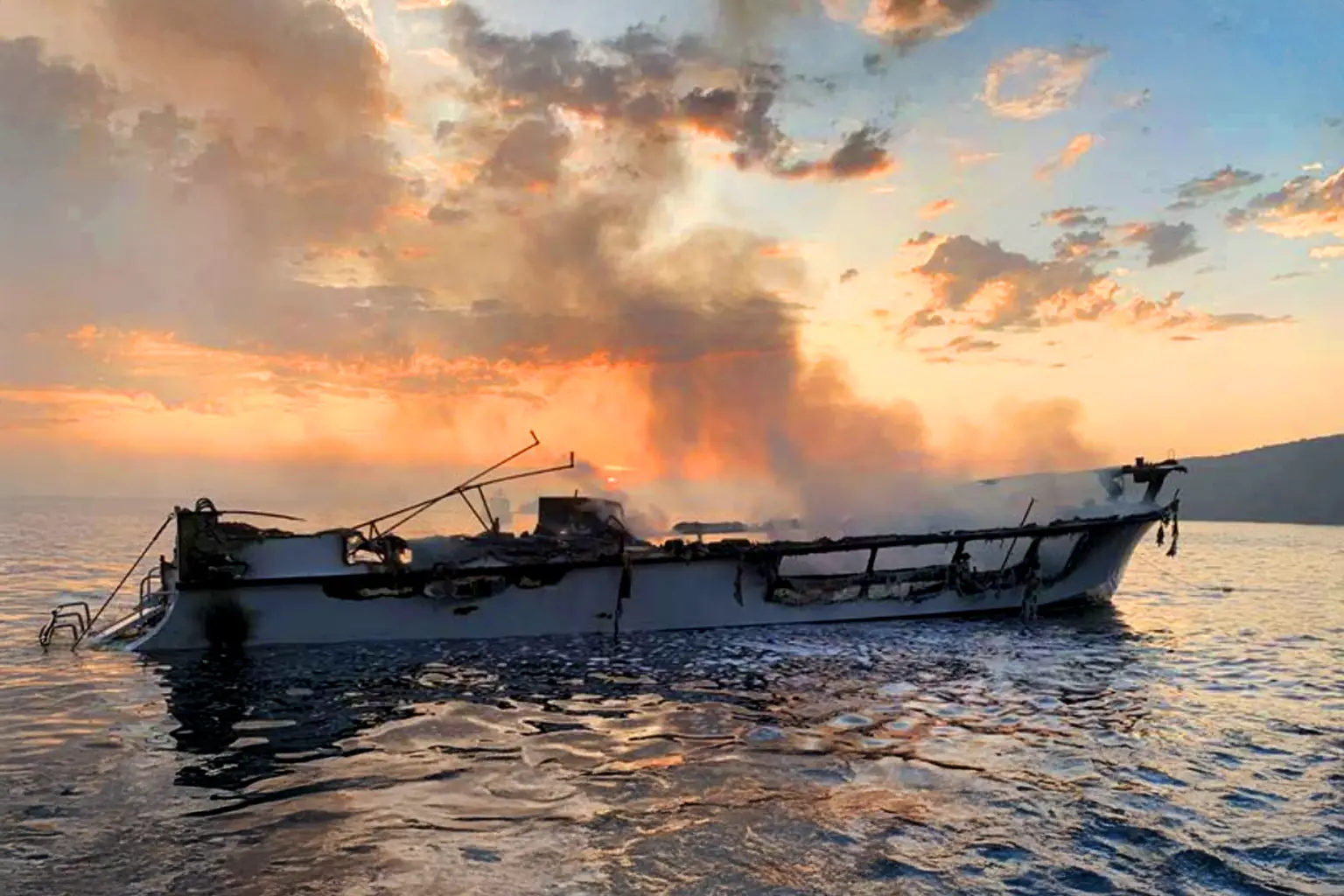

The long legal aftermath of the 2019 Conception dive boat fire reached another milestone this week, as the United States Court of Appeals for the Ninth Circuit upheld the criminal conviction of former captain Jerry Boylan.
The ruling leaves in place the seaman’s manslaughter conviction tied to the deaths of 34 people aboard the dive vessel Conception and confirms the four-year federal prison sentence imposed in 2024.
For divers and liveaboard operators, the case continues to resonate far beyond the courtroom. The tragedy remains one of the most consequential safety failures in modern recreational diving, and a stark reminder that basic onboard procedures can determine whether a fire becomes survivable or catastrophic.
sdm. quick facts
- A US appeals court upheld the conviction of Conception captain Jerry Boylan.
- The charge: misconduct or neglect of a ship officer, often referred to as seaman’s manslaughter.
- The conviction relates to the 2019 fire aboard the dive boat Conception that killed 34 people.
- The court rejected arguments that the jury had been incorrectly instructed about negligence.
- The ruling leaves in place a four-year federal prison sentence imposed in 2024.
- Investigators determined that a required overnight roving watch was not maintained.
What the appeals court decided
In its decision, the Ninth Circuit affirmed the guilty verdict delivered by a federal jury and rejected the defence’s argument that jurors had been improperly instructed on the legal definition of negligence.
The appellate panel described the evidence presented at trial as overwhelming, concluding that the conviction for misconduct or neglect of a ship officer should stand.
Practically speaking, the decision removes one of the final legal barriers in the case. Captain Boylan had remained free while the appeal moved through the federal court system. With the appeal denied, the four-year sentence handed down in 2024 is expected to proceed unless further appeals are filed.
The tragedy that reshaped dive boat safety
The dive vessel Conception was a 75-foot liveaboard charter boat operating multi-day scuba diving trips along the California coast.
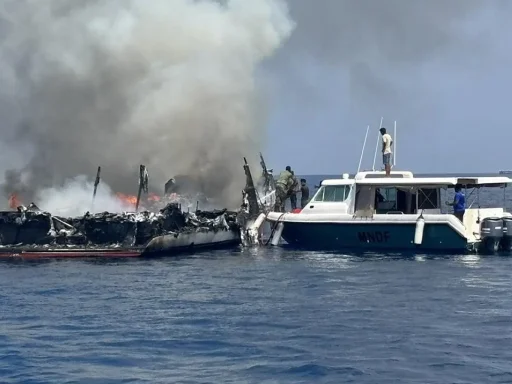
In the early hours of 2 September 2019, while anchored near Santa Cruz Island in Channel Islands National Park, a fire broke out shortly after 3 a.m.
Most passengers were asleep.
Thirty-three guests and one crew member were inside a below-deck bunkroom when the fire spread rapidly through the vessel. The victims were unable to escape the compartment and died primarily from smoke inhalation.
Five crew members, including the captain, escaped the burning vessel after making a distress call.
The scale of the loss – 34 fatalities in a single dive charter incident – made the Conception disaster the deadliest maritime accident involving recreational divers in US history.
The operational failures at the centre of the case
The prosecution’s case focused less on complex technical failures and more on core maritime safety responsibilities.
Federal investigators determined that the required overnight roving watch, a basic safety practice on passenger vessels, was not being maintained at the time of the fire.
A night watch is intended to detect early warning signs such as smoke, heat, electrical issues or overheating batteries before a fire spreads beyond control.
During the trial, prosecutors also pointed to several operational weaknesses that may have contributed to the severity of the disaster:
- Failure to maintain the required overnight watchkeeping procedures
- Inadequate crew preparedness and safety training
- Breakdowns in emergency response once the fire took hold
The appeals court’s decision leaves the conviction firmly tied to those responsibilities.
Why the ruling still matters to divers
Even years after the incident, the Conception fire remains a reference point for discussions about dive boat safety, fire prevention and crew procedures.
Across the liveaboard sector, the tragedy prompted widespread re-examination of:
- Night watch protocols
- Fire detection systems
- Battery charging procedures for cameras and dive lights
- Escape routes from below-deck bunkrooms
- Crew emergency training
For many operators, the incident became a turning point that accelerated safety reviews and regulatory attention across the dive charter industry.
The court’s decision reinforces a central point: ultimate safety accountability on a vessel rests with its command.
What divers should look for on any liveaboard
For divers booking a multi-day charter, the lessons from the Conception disaster remain practical rather than theoretical.
Ask about overnight watchkeeping
A professional operator should be able to clearly explain its night watch procedures.
Key questions include:
- Is there a continuous roving watch while passengers sleep?
- Who is responsible for the watch on each shift?
- What areas of the vessel are checked during each round?
Clear answers usually indicate a structured safety culture.
Identify exits immediately
Before settling into your bunk:
- Locate primary and secondary escape routes.
- Check whether exits are easy to find in darkness.
- Note any narrow corridors, ladders or obstructions that could slow movement.
This simple habit can make a critical difference during an emergency.
Pay attention to the safety briefing
A well-run vessel treats the safety briefing as an operational requirement, not a formality. Crew should clearly explain:
- Muster points
- Alarm signals
- Nighttime procedures
- Who gives instructions during an emergency
If the briefing is rushed or skipped, that’s worth noticing.
Keep pathways clear around bunks
On smaller vessels, clutter can slow evacuation. Divers should:
- Keep bags and charging cables out of walkways
- Avoid blocking ladders or doorways
- Keep a torch accessible at night
These small habits help maintain clear evacuation routes.
A defining moment for dive boat safety
More than five years after the disaster, the legal and operational consequences of the Conception fire continue to shape discussions across the dive industry.
For many operators and divers, the case underscored a reality that sometimes gets overlooked in adventure tourism:
Safety culture is built on routine – watch-keeping, drills, clear procedures – repeated every single night.
The Ninth Circuit’s ruling does not change what happened in 2019. But it reinforces a message the diving community has taken seriously ever since: those routines are not optional.
sdm. knowledge
The dive vessel Conception caught fire in the early morning of 2 September 2019 while anchored near Santa Cruz Island in California’s Channel Islands. Thirty-four passengers and one crew member died after becoming trapped in a below-deck bunkroom as the fire spread.
The vessel’s captain, Jerry Boylan, was convicted in federal court of misconduct or neglect of a ship officer, a charge often referred to as seaman’s manslaughter.
The US Court of Appeals for the Ninth Circuit upheld the conviction, rejecting arguments that the jury had been incorrectly instructed about negligence.
In 2024, a federal court sentenced Jerry Boylan to four years in prison. The appeals court ruling allows that sentence to proceed.
The disaster highlighted the critical importance of onboard safety procedures such as overnight watchkeeping, fire detection systems, emergency drills and clear evacuation routes on dive boats and liveaboards.