
At GO Diving Show 2026, the standard diving presentation format gets a well deserved shake-up. Researchers from Imperial College London are set to run an interactive session on the Tech Stage built around one of diving’s most persistent and misunderstood variables: carbon dioxide.
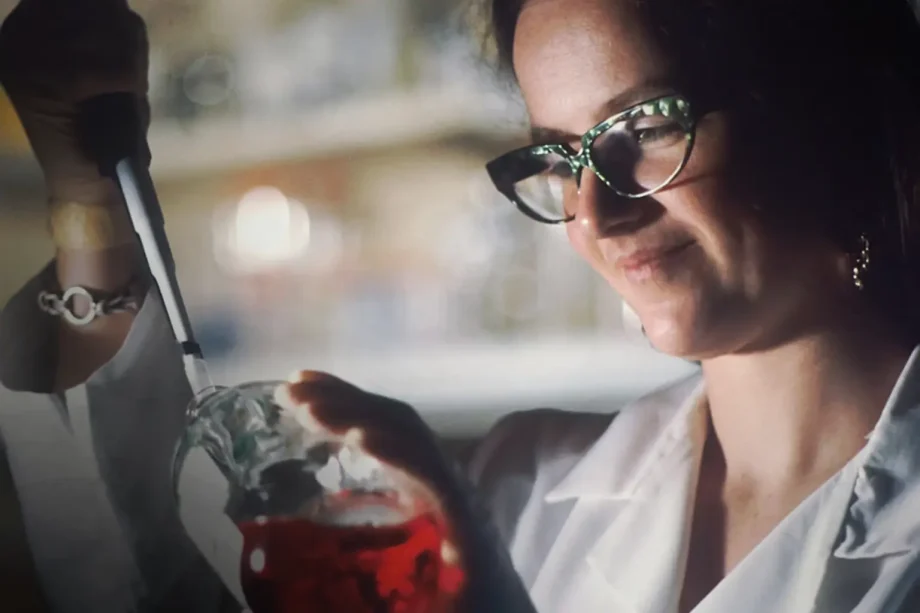
Leading it is Dr James Moss, BSAC Dive Leader and physiologist at Imperial’s National Heart and Lung Institute, focusing on how CO₂ accumulates, how it drives ventilation, and why that matters across two very different ends of the spectrum: breath-hold diving and closed-circuit rebreathers.
This isn’t about revisiting entry-level theory. It’s about making the physiology land in a way that changes how you dive.
sdm quick breakdown
- CO₂ (not dropping O₂ ) is the primary trigger for your urge to breathe
- CO₂ accumulation can turn “comfortable” breath-holding into a rapid loss of control
- In rebreathers, CO₂ breakthrough or scrubber failure is immediately hazardous
- GO Diving Show 2026 is doubling down on interactive learning alongside headline speakers
The session: CO₂, breathing drive, and why things escalate quickly
CO₂ is the inevitable by-product of metabolism. As workload rises, eg. finning into current, managing kit, dealing with stress etc, production increases. The body’s response is automatic: rising arterial CO₂ stimulates chemoreceptors, ramping up respiratory drive.
That rising urge to breathe is not primarily about “running out of oxygen.” It’s about CO₂ crossing a threshold your body refuses to ignore.
The planned live demonstration aims to make that mechanism tangible rather than abstract, showing how CO₂ builds, how quickly tolerance can erode, and how perception and physiology can diverge under load.
For breath-hold divers, the implications are obvious. If CO₂ tolerance is misunderstood, misjudged, or artificially suppressed through poor practice, the margin between “fine” and “not fine” narrows fast, particularly when you add task loading, temperature stress, or ego-driven extensions into the mix.
For experienced divers in the room, this won’t be news. But seeing it demonstrated in real time, and framed by a working physiologist who also dives, is likely to sharpen the mental model.
Rebreathers: when CO₂ becomes the immediate threat
At the technical end, CO₂ is not an academic discussion.
Closed-circuit systems depend on effective scrubbing to remove carbon dioxide from the loop. If that process fails, whether through scrubber exhaustion, packing issues, channeling, flooding, or incorrect setup, CO₂ accumulation can outpace a diver’s ability to respond.
Hypercapnia degrades cognition, which then increases breathing effort, and things can cascade quickly. In that scenario, the problem is not oxygen control. It’s the gas you’re not meant to be rebreathing.
This Tech Stage session is expected to connect the dots directly: breathing physiology, scrubber function, and the operational consequences of complacency.
For industry leaders and instructors, that framing matters. CO₂ management is often treated as background context rather than a front-of-mind risk driver.
GO Diving Show 2026:
headline pull on the Main Stage

The Main Stage line-up at GO Diving Show 2026 is built to draw traffic, with names including:
- Steve Backshall
- Lizzie Daly
- Chris Lemons
- Liz Parkinson
- Andy Torbet (returning as MC and speaker)
It’s a broad appeal programme … exploration, media, commercial diving… the kind of content that fills seats. But for many experienced divers, the deeper value sits off the Main Stage.
Beyond the headline acts:
Tech, UK, and Inspiration/Photo stages
The dedicated stages traditionally carry the more granular material, the talks that reward attention. Speakers across the UK Stage, Tech Stage and Inspiration/Photo Stage include:
- Paul Toomer and Mark Powell
- Kirsty Andrews
- Emma Taylor and Gordon Taylor
- Rico Anselmi and Sophie Shields
- Duncan Ross
- Nick Fazah
- Barry McGill
- Ahmed Gabr
- Dominic Robinson
One operational note: speakers on the dedicated stages appear on only one of the two days. If you’re travelling any distance, a weekend ticket significantly reduces scheduling frustration.
Interactive zones at Go Diving Show 2026: learning by doing!
The show floor extends beyond passive listening. Planned features include:
- A VR technical wreck dive experience
- A Nautical Archaeology Society “shipwreck” survey zone
- Breath-hold workshops with Freediving London
- A marine biology area hosted by Just One Ocean
- A Historical Diving Society equipment display
- New for 2026: participation in Imperial College London research activity on-site
Practical implications for working divers and instructors
Treat CO₂ as a primary variable, not background theory.
High workload, poor trim, cold stress, or task saturation all amplify production. The body’s response is predictable — but not always well managed.
Rebreather divers: scrubber discipline is non-negotiable.
Packing quality, duration tracking, storage, and manufacturer guidance are operational safety controls, not admin details.
Breath-hold divers: physiology doesn’t negotiate.
If you’re pushing tolerance, understand the mechanism you’re pushing against.
Use events strategically.
A show like this is an opportunity to address blind spots — whether that’s physiology, CCR planning, freediving fundamentals, or workload management under stress.
A brief safety note
Breath-hold and rebreather diving both carry significant risk when equipment, procedures, or supervision fall short. Operate within your training, follow manufacturer guidance, and seek qualified instruction when entering new disciplines.
The wider picture
There’s a noticeable shift in dive events toward experiential education, less “here’s the theory,” more “here’s what it feels like.”
The interactive CO₂ physiology session from Imperial College London exactly fits that direction. For experienced divers, the science isn’t new. But seeing it demonstrated, and tied directly to operational consequences, may be the reminder that sticks with us.
And in diving, the reminders that stick tend to be the ones that matter.
sdm. knowledge
Related questions and answers
Carbon dioxide (CO₂) buildup can cause hypercapnia, leading to increased breathing effort, cognitive impairment, panic and loss of consciousness. In rebreathers, scrubber failure can accelerate this risk.
Hypercapnia is elevated CO₂ in the bloodstream. In closed-circuit rebreathers, it can result from scrubber exhaustion, poor packing or loop issues.
The body’s chemoreceptors respond primarily to rising CO₂ levels, not falling oxygen, triggering ventilation.