
Image: Nautilus Adventures
The Sea of Cortez, also known as the Gulf of California, is one of Mexico’s most biologically productive marine ecosystems and a globally recognised pelagic wildlife corridor.
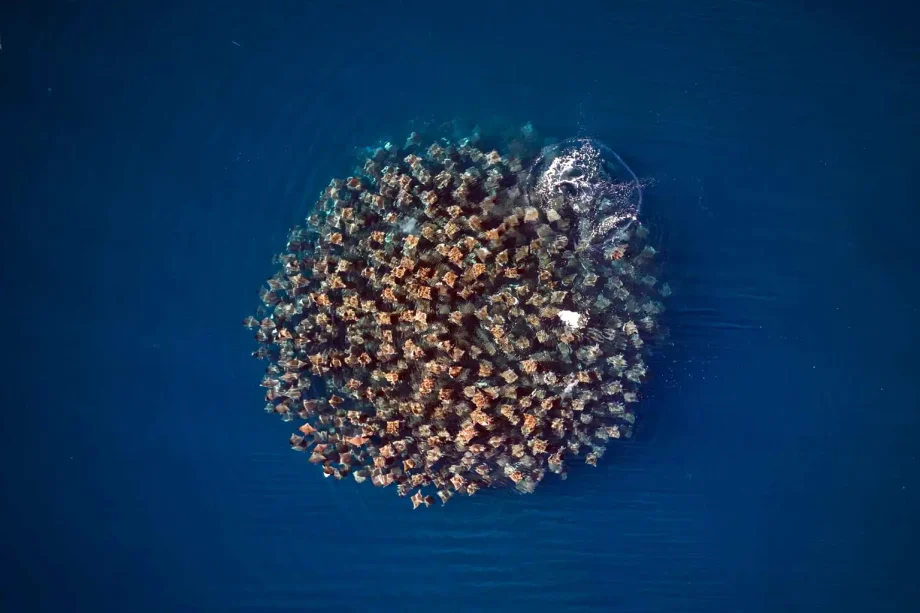
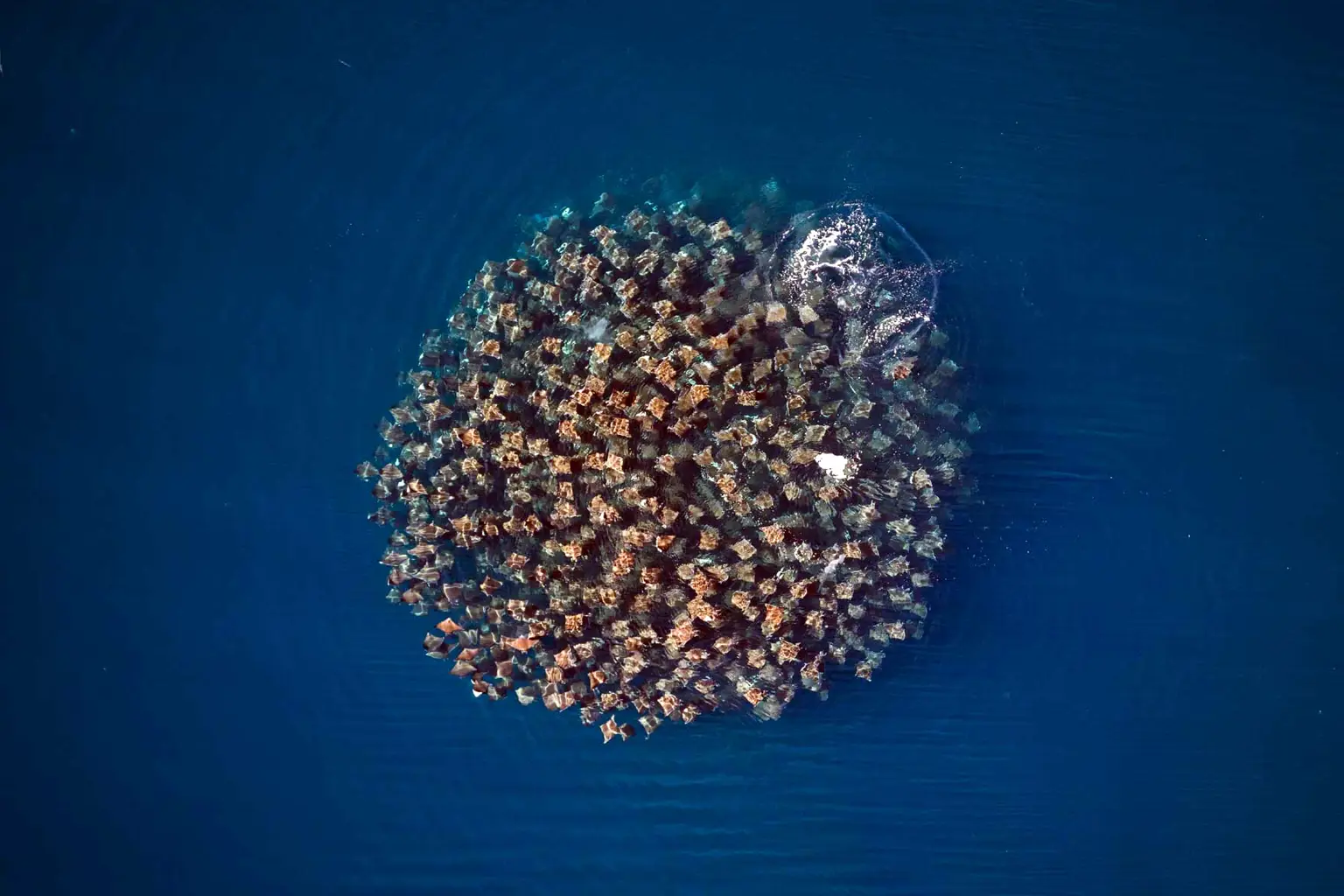
The wildlife in this area doesn’t perform on schedule. It builds quietly, then explodes. Mobula rays spiraling in coordinated formations, dolphins carving through bait balls, the occasional black dorsal fin cutting a line across calm water.
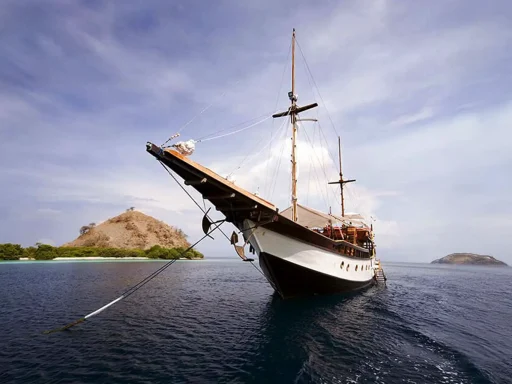
This May, Shark Angels is stepping into that unpredictability with a seven-night expedition-style liveaboard adventure. The trip runs May 30 to June 6, departing La Paz aboard the Nautilus Gallant Lady, part of the Nautilus Liveaboards fleet.
The concept is simple: follow wildlife first. Let the itinerary follow second.
Video: Who are Shark Angels?
sdm quick facts
- Dates: May 30–June 6 (7 nights / 8 days)
- Departure port: La Paz, Baja California Sur, Mexico
- Style: Expedition-based, flexible routing
- Who can join: Divers and snorkelers (no scuba certification required)
- Differentiator: Dedicated aerial wildlife spotter plane
Why late spring in Baja matters
Late May into early June is a transitional window in the Sea of Cortez. Surface waters warm, plankton productivity attracts baitfish, and larger pelagics begin concentrating in active feeding zones.
Mobula rays are the headline draw at this time of year, often forming vast schools that move quickly across open water. Whale sharks, primarily juveniles, are typically present in protected areas near La Paz. Orcas pass through seasonally, unpredictable but possible. Dolphins, marlin, and California sea lions round out the mix.
Nothing is guaranteed here. That’s part of the region’s appeal. The payoff comes when timing, temperature, and wildlife behavior align, sometimes dramatically.
Expedition travel, not a checklist cruise
This isn’t structured around a fixed sequence of dive sites. It’s structured around conditions.
Each day begins with assessment: wind direction, sea state, surface temperature, recent wildlife activity, and aerial reconnaissance. If a large aggregation of mobulas is reported 30 nautical miles away, that becomes the priority. If surface action disappears and a protected bay offers better water clarity and safety, the plan shifts.
That fluidity defines expedition travel. It can mean long periods scanning the horizon followed by sudden, high-energy briefings when the call comes in. It may mean moving at night to position the vessel for morning light. It requires guests who are comfortable trading predictability for possibility.
For divers used to fixed four-dive schedules at mapped reef systems, the rhythm feels different. Here, the “best dive of the week” might not be a dive at all — it could be a surface encounter unfolding in blue water under open sky.
Aerial support changes the equation
A dedicated wildlife spotter plane adds a layer rarely seen in recreational liveaboards.
From the air, patterns become visible that are impossible to detect from deck level — bait balls compressing, mobula formations shifting direction, unusual surface disturbance that signals predator activity. The plane can cover dramatically more ocean in a short period, allowing the boat to move with intention rather than guesswork.
That expanded search capacity doesn’t just increase encounter probability; it refines decision-making. Instead of burning hours chasing rumors over radio chatter, the crew works from verified visual information. The result is a more focused, responsive week on the water.
Divers and snorkelers on equal footing
A notable aspect of this expedition is its inclusivity. No scuba certification is required to participate fully.
Certified divers can complete scheduled dives — including Nitrox-supported profiles and a mobula night dive — but many of the most dynamic interactions in Baja happen near the surface. Fast-moving rays, dolphins, and other pelagics often remain in the top water column, making snorkeling not just viable, but optimal.
Rather than dividing guests into rigid “diver” and “non-diver” tracks, this format keeps everyone engaged in the same unfolding narrative. Mixed-experience groups don’t need to compromise. Surface and scuba activities complement each other, depending on what the wildlife dictates.
Conservation as operating principle, not decoration
Shark Angels frames its expeditions around education and shark advocacy. In practice, that translates into deliberate wildlife briefings, clearly defined approach distances, and an emphasis on reading animal behavior before entering the water.
The Sea of Cortez is biologically rich, but it’s not immune to pressure. Fishing, climate variability, and expanding tourism all shape the region’s future. Large pelagics, particularly sharks and rays, play a critical ecological role as apex and mesopredators. Their presence signals system health; their decline would signal imbalance.
On expedition trips like this, conservation isn’t a lecture between dives. It’s embedded in how encounters are conducted — limiting pursuit behavior, avoiding overcrowding, and prioritizing animal welfare over close-range photography.
High-impact wildlife travel only remains viable if the wildlife remains undisturbed.
Nautilus Gallant Lady
Accommodation and pricing
Two double-occupancy package tiers are available:
- Superior Suite: US$5,195
- Premium Suite: US$5,795
Included
- 7 nights aboard Nautilus Gallant Lady
- 6 days diving and snorkeling
- Up to 6 dives + Nitrox
- Mobula night dive and snorkel
- Tanks, weights, towels
- All meals, snacks, and non-alcoholic beverages
- Spotter plane operations
- Group transfers (La Paz/Cabo ↔ vessel)
- Port and National Park fees
- 16% VAT and government taxes
Not included
- International flights
- Hotel nights before/after
- Alcohol
- Rental gear
- Travel insurance (recommended)
- Dive insurance (required)
- Crew gratuities
- WiFi
- Potential fuel surcharge
What experienced divers should realistically expect
This style of trip rewards adaptability.
You may wake to flat calm and blue water, only to find afternoon winds reshaping the plan. You might spend time scanning from deck before entering the water. When wildlife is located, preparation can move quickly, short briefings, fast gearing up, coordinated entries.
Surface intervals may feel longer than on reef-heavy itineraries. Bottom time may be secondary to surface interaction. Encounters can be brief but intense, especially with highly mobile species.
Strong buoyancy control, comfort in open water without visual reference, and the ability to follow clear behavioral instructions matter more here than maximum depth ratings. Photographers should prepare for rapid entries and shifting light conditions. Snorkelers should be physically comfortable covering distance at the surface.
Above all, guests need the right mindset: expedition travel is about probability, not guarantees.
*we do not receive any commission on providing this link to the booking partner. We share for free, because it’s the right thing to do!
The Sea of Cortez has always rewarded those willing to meet it on its own terms. When mobulas ignite the surface at dusk or dolphins compress bait against glassy water, structured itineraries feel secondary.
This expedition isn’t selling certainty. It’s offering time, mobility, aerial intelligence, and access to one of the most biologically dynamic marine corridors in the Eastern Pacific during an active seasonal window.
For divers, snorkelers, and ocean advocates who prefer dynamic wildlife over fixed dive-site lists, that’s a compelling proposition.
sdm. knowledge:
Shark Angels Sea of Cortez Expedition
No. The trip is designed for both divers and snorkelers. Certified divers can complete scheduled dives, but surface encounters and snorkeling are central to the experience.
Late spring commonly brings mobula ray aggregations, whale sharks in the La Paz region, dolphins, and seasonal whale activity. Orca sightings are possible but never guaranteed.
A spotter plane expands the search radius dramatically, helping locate active wildlife zones faster and allowing the vessel to position strategically before in-water sessions.
No. This is an expedition-style trip. Routing and daily plans adjust based on weather, sea conditions, and wildlife movement.
Comfort in open water and good situational awareness are important. While no certification is required for participation, blue-water confidence enhances the experience.