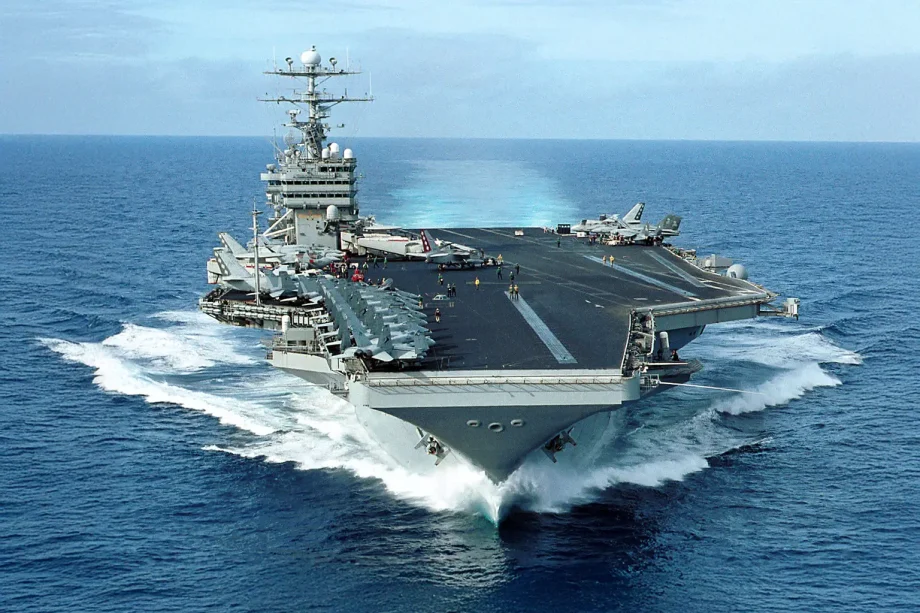
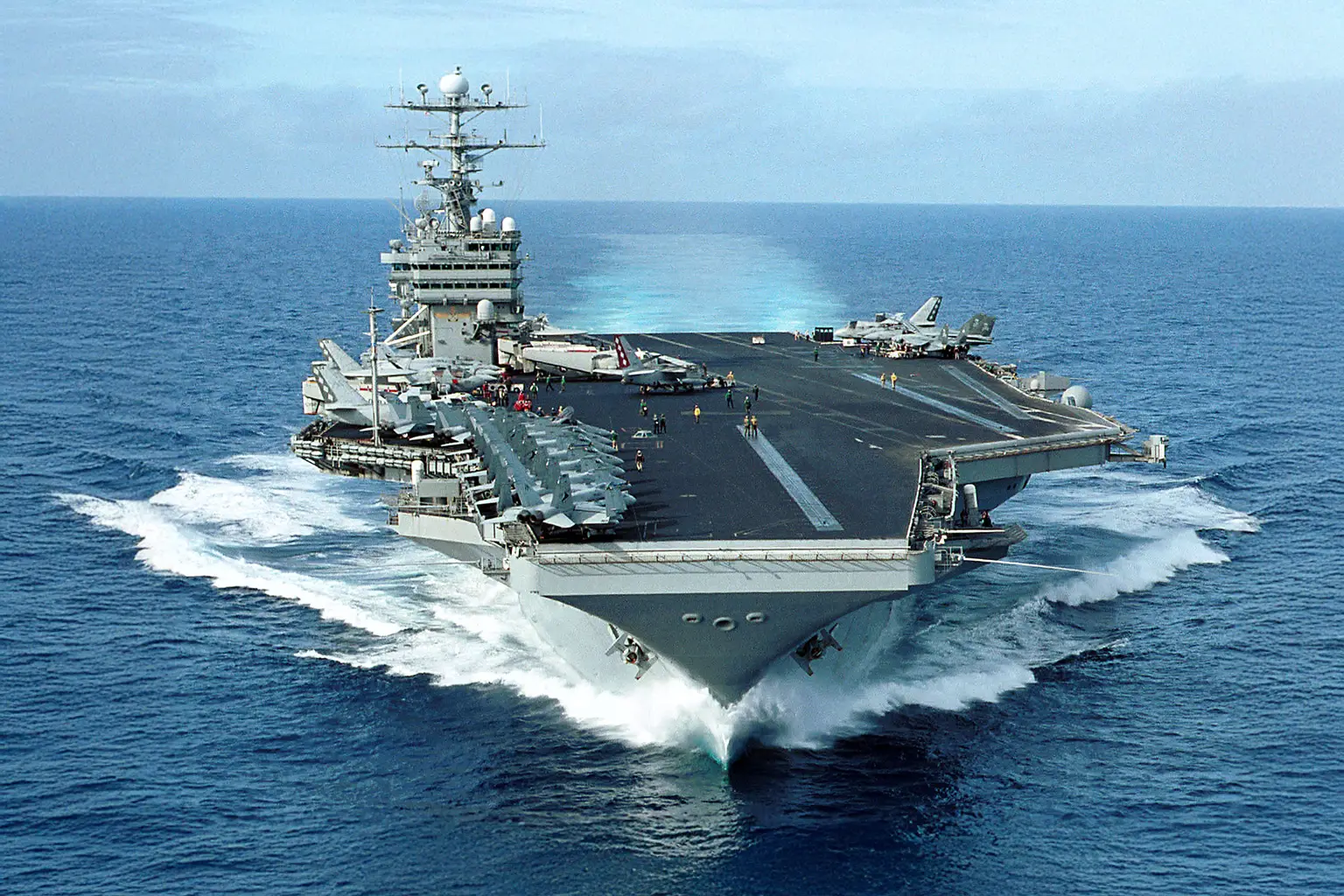

Image credit: U.S. Navy photo by PH3 Adam R. Cole / Public Domain
The Middle East is in the midst of a major geopolitical shock. A large-scale military operation by the United States and Israel against Iran began on February 28, 2026, targeting key military, nuclear, and leadership infrastructure in Tehran.
In the opening strikes, Iran’s supreme leader, Ayatollah Ali Khamenei, was confirmed killed after targeted attacks on his compound and other key figures in Iran’s leadership were hit. This has created profound political instability and uncertainty across the region.
In response, Iran has launched missile and drone strikes not only at Israel and U.S. bases but also at several Gulf states that host U.S. and allied assets. Explosions and alerts have been reported in the United Arab Emirates, Qatar, Kuwait, Bahrain and other nearby countries, and numerous airspaces have closed or been restricted as a result.
Air travel across the Middle East has been thrown into chaos, with cancellations, diversions and stranded passengers as key hub airports in Dubai, Abu Dhabi and Doha temporarily suspend operations and reroute flights. The broader unfolding conflict has triggered a wave of travel advisories from governments around the world warning against travel to many parts of the region, including some Gulf states, Israel and Iran.
For divers with upcoming trips and for dive businesses operating around the Middle East, these developments are more than just breaking news. They have real impacts on travel logistics, confidence and business planning.
What This Means for Divers
Air Travel and Connections
While the conflict has led to airspace disruptions across parts of the Gulf, flights to Egypt’s main Red Sea dive destinations are not currently affected.
Divers travelling directly from European cities to Hurghada, Marsa Alam or Sharm el Sheikh are, at the time of writing, still operating as scheduled. These routes do not require transit through Gulf airspace and are therefore largely insulated from the disruptions affecting hubs such as Dubai or Doha.
The primary travel risk right now applies to routes that connect through Gulf states where temporary airspace restrictions and operational pauses have occurred.
If you’re travelling to the Red Sea in the coming days, without connecting flights in the Gulf region, the likelihood of cancellation is currently relatively low. However, the situation remains fluid, and monitoring airline updates and official travel advisories remains essential. you get there in the first place.
Travel tip: Double-check your flight status frequently in the days before departure. If your trip connects through the Gulf on one of the big carriers, stay in close contact with your airline for alternate routing options. Build extra buffer time into your itinerary in case of delays, and understand your rights and refund options.

On-The-Ground Safety at Dive Destinations
Most established dive areas, including the Red Sea diving regions of Egypt, Jordan’s reef sites around Aqaba, and Oman’s coast, do not lie in active conflict zones. That said, political instability in the broader region affects:
- Commercial schedules for flights and ferries
- Regional maritime insurance and vessel operating costs
- Perception among international travellers
- Regulatory scrutiny and safety planning by tour operators
For divers, the immediate physical risk while underwater at these sites remains low. The greater uncertainty lies in reaching them and getting home smoothly, especially if your travel routes pass near or over contested airspace.
More pain for Red Sea businesses:
Existing Pressures Amplified
Even before this latest escalation, diving in the Red Sea was already facing serious industry headwinds:
- A series of high-profile liveaboard incidents and accidents over recent years has prompted safety investigations and reduced confidence among some travellers.
- Regulatory authorities and independent bodies have been issuing warnings and tightening oversight of liveaboard operations.
- Some vessels have faced operational delays or cancellation due to safety and certification issues.
Now, the addition of broader Middle Eastern conflict increases the cloud of uncertainty for operators and divers alike. Red Sea dive businesses depend on international bookings and smooth travel routes; disruptions, whether real or perceived, can slow bookings or prompt cancellations.
Operators may face higher insurance premiums if regional risk assessments remain elevated, and logistical complications as airlines adjust schedules or suspend routes altogether.
What Divers Should Do Before Travelling
If you’ve already booked a trip or are considering one in the region:
Review your travel insurance:
Make sure your policy covers trip interruption or cancellation linked to political or military escalation. Standard policies often have exclusions for acts of war unless you add specific coverage.
Confirm with your operator:
Ask your dive operator for their contingency plans, safety protocols and up-to-date itinerary details. Transparent communication is key when uncertainty spikes.
Stay informed via official advisories:
Follow government travel advisories from your home country or international bodies rather than social media speculation. These advisories often trigger changes in travel and insurance policies.
Build flexibility into your travel plans:
Where possible, choose refundable tickets, and allow extra time for connections. If flights aren’t available through your intended routes, consider alternate airports or routing options.
What It Means for Dive Businesses
Dive operators in the Middle East are navigating a complex landscape:
- Customer confidence: Uncertainty about travel and regional stability can slow booking momentum. Divers hesitant to commit may delay travel decisions or choose alternative destinations.
- Operational costs and logistics: Higher insurance rates, increased safety inspections and rerouted logistics increase costs for operators.
- Marketing and communication: Operators must reassure clients with clear, timely information and flexible booking terms.
Liveaboard and resort operators who can demonstrate strong safety practices, flexible policies and transparent communication may have a competitive advantage during this period of uncertainty.
Current Outlook for Diving in the Middle East
Conflict in the Middle East rarely affects all areas equally, and the specific implications for divers depend on how the situation evolves. At present, most dive destinations are not in direct combat zones, but the ripple effects, especially on travel routing, airspace closures and global perception, are very real.
For now, divers and operators alike should lean into preparation, flexibility and reliable information rather than alarm. Understanding both the geopolitical context and the practical travel implications will help you make informed decisions about upcoming trips in the months ahead.
Key Facts at time of writing
- Iran’s leadership has been killed in early strikes, creating a potential leadership vacuum and heightened instability.
- Iran has launched retaliatory strikes across multiple Gulf states, prompting airport closures and travel disruptions.
- Airspace closures and flight cancellations are affecting international travel, even for divers headed to distant destinations.
- Red Sea diving remains physically safe, but travel logistics, insurance and traveller confidence are under pressure.
- Preparation and flexibility are essential if you’re planning a dive trip in the region right now.
sdm. knoweldge
Most established dive destinations — including Egypt’s Red Sea, Jordan’s Aqaba region and Oman’s coastline — are not active combat zones. The primary risk for divers is not at the dive site itself, but travel disruption caused by airspace closures and regional instability. Always check official travel advisories before departure.
Red Sea dive sites are not directly involved in military activity. However, the broader geopolitical situation may affect:
• Flight routes and schedules
• Traveller confidence
• Liveaboard operations
• Insurance requirements
The impact is logistical and economic rather than operational underwater risk.
Iran has launched retaliatory attacks beyond Israel, including actions affecting Gulf states such as the United Arab Emirates, Qatar, Bahrain and Kuwait. This has led to temporary airspace closures and airport disruptions, particularly impacting major transit hubs.
There is no universal answer. If your destination is not in a conflict zone and flights are operating normally, cancellation may not be necessary. However, you should:
• Review your travel insurance coverage
• Monitor airline updates
• Check your government’s travel advisory status
• Confirm contingency plans with your dive operator
Flexibility is essential while the situation evolves.
Flights may be rerouted, delayed or cancelled depending on airspace restrictions. Many international routes pass through Gulf hubs such as Dubai and Doha, which have experienced temporary operational disruptions. Check with your airline regularly in the lead-up to travel.
Yes. Even before this escalation, the Red Sea liveaboard sector had been facing increased scrutiny due to a series of vessel accidents, safety investigations and regulatory changes. The current geopolitical situation adds another layer of uncertainty, particularly around booking confidence and travel logistics.
Yes. Operators may face:
• Booking slowdowns due to traveller hesitation
• Higher insurance costs
• Increased operating expenses
• More complex logistics
Businesses that maintain transparent communication and strong safety standards are likely to be more resilient during this period.
This depends entirely on how the conflict evolves. Short-term flare-ups may only cause temporary flight disruptions. Prolonged instability could impact regional tourism for months. Divers should monitor official updates rather than react to speculation.
Before departure, confirm your flight status and routing directly with the airline, as schedules and airspace access can change quickly.
Review cancellation and refund policies for both flights and dive bookings so you understand your options if plans shift. Make sure your travel insurance explicitly covers trip interruption or cancellation due to political instability or military escalation.
Stay updated through official government travel advisories rather than relying on social media reports, and maintain direct communication with your dive operator to understand any contingency planning on their side.
In the current climate, preparation and flexibility are far more valuable than reacting impulsively to headlines.