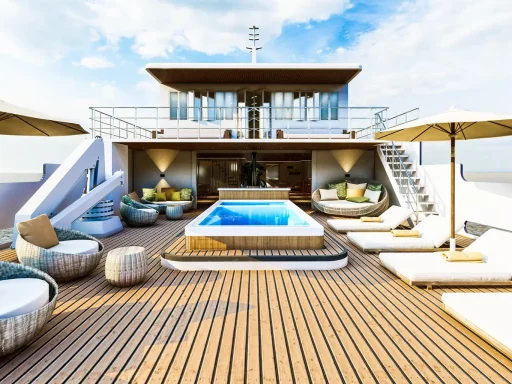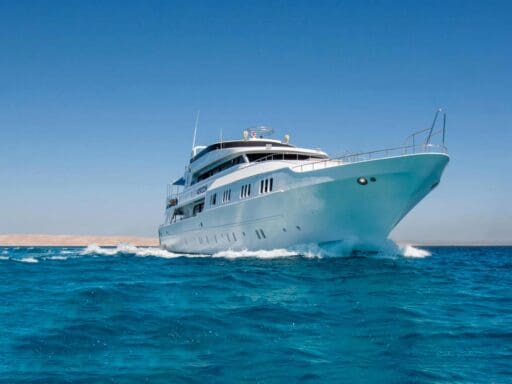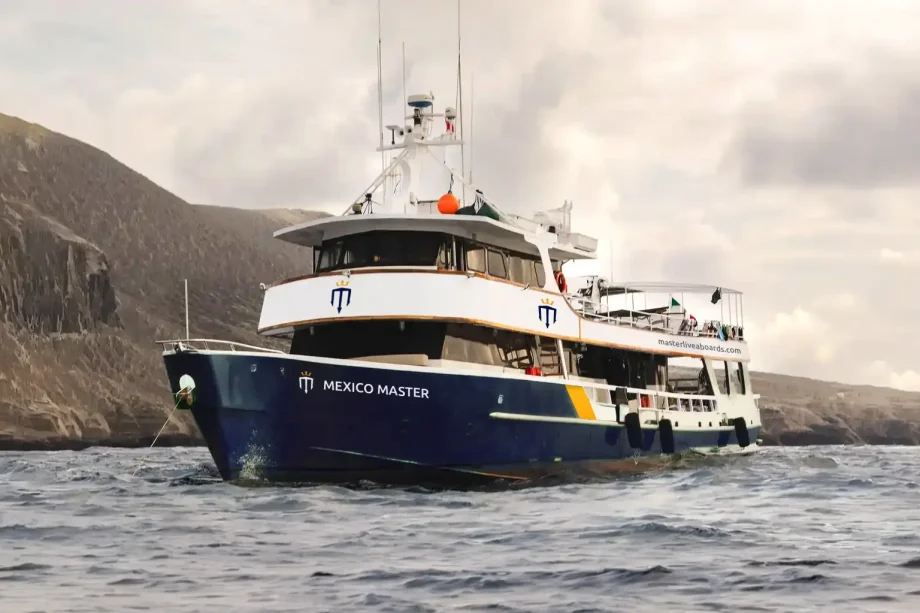
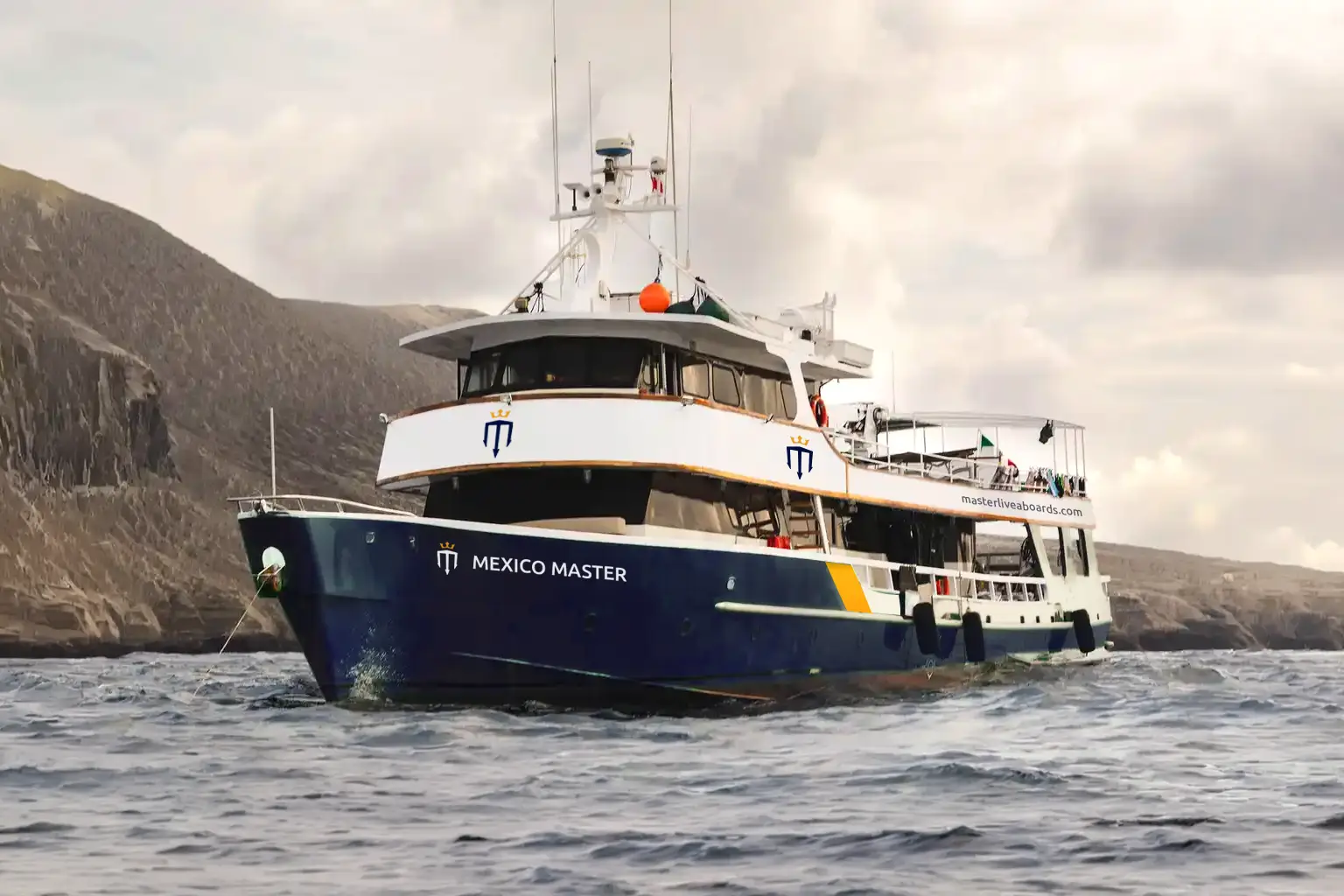

Image of Mexico Master: artists impression
Return of controversial Solmar V vessel raises more questions than answers
The return of the Solmar V vessel in Mexico, to be rebranded as Mexico Master and associated with Master Liveaboards, should be a straightforward success story. A well-known vessel is back, a globally recognised brand has stepped in, and one of the world’s most sought-after dive destinations regains capacity.
Yet the reaction across the diving industry will likely be cautious rather than enthusiastic.
This is not a simple relaunch. It is the unfortunate continuation of a story that left divers out of pocket, disrupted travel plans worldwide, and exposed structural weaknesses in the liveaboard sector. As Mexico Master, formerly known as Solmar V, prepares to sail again, one central question continues to surface:
Has anything fundamentally changed… or just the name on the hull?
What really happened to Solmar V?
A collapse that rippled across the industry
The original operation behind Solmar V, long associated with expeditions to the Revillagigedo Islands, came to an abrupt halt in early 2026.
In the months leading up to that shutdown, the pattern was increasingly difficult to ignore. Trips were cancelled at short notice, communication became unreliable, and refund requests often went unanswered. What made the situation particularly damaging was the fact that bookings continued to be accepted during this period.
For many divers, the consequences were immediate and financial. Losses often reached into the thousands, but the longer-term damage went beyond money. The liveaboard model relies heavily on trust, and once that trust is broken, the impact extends across agents, platforms, and even competing operators.
Today, that history will follow the vessel into its new phase as Mexico Master, shaping how divers perceive the relaunch.
The critical distinction most divers overlook
One of the most important aspects of this story is something many customers rarely consider: the difference between who owns a vessel and who operates it.
In the case of Solmar V, the operator collapsed. But the vessel itself, of course, remains. It could be moved, reassigned, and brought back into service under a different structure. That opens the door to several possible scenarios, not all of which represent a clean break from the past.
At its simplest, the current situation likely falls somewhere between two models:
- A full takeover, where ownership and operations have both changed hands completely
- A management or franchise-style setup, where a new brand operates the vessel but ownership remains partially or fully unchanged
That distinction is not just technical. It directly affects accountability, financial transparency, and ultimately, customer trust, all of which will define whether Mexico Master succeeds or struggles.
Master Liveaboards: strong brand, flexible structure
A global operator with reach
Master Liveaboards has built a strong presence since 2015, expanding into some of the most competitive dive destinations in the world, including the Galápagos Islands and the Maldives.
Operating in these regions requires more than just a strong marketing strategy… it demands logistical consistency, experienced crews, and the ability to deliver high-end experiences in remote environments. In that sense, Master Liveaboards brings credibility to the relaunch of Mexico Master in the Socorro market.
A track record that includes serious maritime incidents
At the same time, it is important to recognise that Master Liveaboards’ history – including vessels previously operating under the Siren Fleet brand – is not without significant incidents. While none of these are uncommon within maritime industries, the number and severity are notable when viewed collectively.
Over the years, multiple vessels connected to the wider fleet have experienced major events:
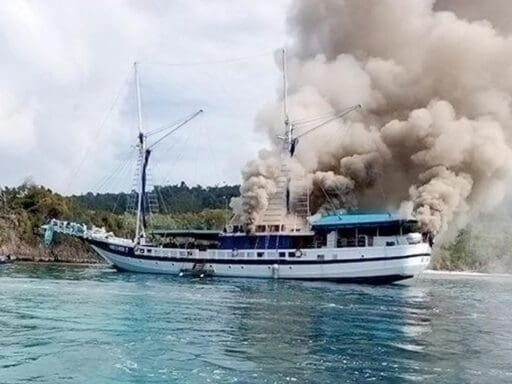
- Fire-related total losses, including Indo Siren, Mandarin Siren, and Blue Voyager in the Maldives
- Grounding and sinking, most notably Fiji Siren, which sank after hitting a reef
- Structural failure and abandonment, as seen with Oriental Siren, which suffered hull damage in rough conditions leading to flooding, evacuation of the vessel and eventual loss of the vessel
- Severe storm damage, including Truk Siren, which was driven onto a reef during Typhoon Masak before later being looted and burned
This broader operational history adds important context as Master Liveaboards takes over (or at least operates) Mexico Master, particularly in a demanding environment like Socorro.
Where the model introduces complexity
At the same time, the company’s growth has been supported by a flexible operational model. Not every vessel in its portfolio is fully owned. In several cases, for example Indo Master or Maldives Master, operations are structured through partnerships or management agreements.
That model works well for expansion, but it introduces a layer of ambiguity, particularly in situations like this one.
The key risks typically associated with these structures include:
- Blurred accountability, where it’s not always obvious who is ultimately responsible
- Financial opacity, especially around where payments are processed and held
- Operational dependence on third parties, which can vary in reliability
The issue of blurred accountability is not theoretical. It has played out in real-world scenarios, most notably in a fatal incident aboard Bahamas Master.
During a controversial shark-feeding dive, a German diver lost her life in an attack involving a tiger shark. What followed was not just a tragedy, but a complex dispute over responsibility. Three separate entities were involved in the trip:
- Master Liveaboards, as operator and part-owner of the vessel
- WiroDive, a major German tour operator, co-organiser and financially invested in the vessel
- Shark School, which had chartered the vessel and brought its own guests, specifically for risky shark feeding dives
In the aftermath of the tragedy, responsibility became fragmented. Each party’s role overlapped, and the lines between operator, organiser, and activity provider were not clearly defined. As a result, accountability was difficult to assign, and the situation became highly contentious within the industry.
The fallout from this incident ultimately contributed to Master Liveaboards stepping away from the partnership structure involved. More importantly, it exposed a structural issue that remains relevant today: when multiple stakeholders are involved in a single operation, clarity around responsibility becomes critical, especially when things go wrong.
That same question now sits at the centre of the Mexico Master relaunch.
Mexico liveaboard diving: a premium, fragile ecosystem
Why Socorro matters so much
The Revillagigedo Islands remain one of the most desirable big-animal diving destinations globally.
Divers travel here for encounters that are difficult to replicate anywhere else, including giant manta rays, large schools of sharks, and regular dolphin interactions in open water. The remoteness of the islands adds to their appeal, but also to the complexity of operating there.
Trips are typically long, logistically demanding, and priced at a premium level. It is not unusual for a single liveaboard expedition to cost several thousand euros, with bookings made many months in advance. This combination of high cost and long lead times makes reliability essential, particularly for a newly reintroduced vessel like Mexico Master.
A market that doesn’t forgive easily
The Mexico liveaboard sector is relatively small and tightly connected. There are limited permits, a finite number of vessels, and a customer base that shares information quickly through forums, agents, and repeat travel networks.
When an operator performs well, reputation compounds positively. But when something fails, the opposite happens just as fast. The Solmar V collapse has become a reference point in industry discussions, not just because of the financial losses, but because of how the situation was handled.
As a result, Mexico Master enters the market under far closer scrutiny than a typical new launch.
Can Master Liveaboards rebuild trust?
There is a clear path to success, but it is narrower than it might appear.
Master Liveaboards has several advantages: a recognised global brand, access to an existing customer base, and experience operating in complex environments. Demand for Socorro diving remains strong, and a well-run operation could allow Mexico Master to regain momentum relatively quickly.
However, success will depend less on how they market the vessel and more on credibility.
To rebuild confidence, several factors will likely matter more than ever:
- Clear communication about ownership and operational control
- Secure and transparent payment processes
- Reliable cancellation and refund policies
- Consistency in delivering the promised onboard experience
These are not new expectations, but they are now being scrutinised far more closely, especially in relation to Mexico Master’s launch phase.
A more cautious diver mindset
One of the lasting impacts of the Solmar V situation is a noticeable shift in how divers approach bookings. Many are now more deliberate, favouring payment methods that offer protection and seeking reassurance before committing to expensive trips.
Agents and booking platforms are adapting in parallel. There is greater emphasis on due diligence, operator vetting, and understanding the financial structures behind the brands they promote. And rightly so – in this environment, any uncertainty around ownership or accountability becomes a barrier to booking… something that will likely affect Mexico Master’s early success.
The questions that still matter
Despite the relaunch, several key questions remain unanswered, and they are central to how this story unfolds.
- Who legally owns the Solmar V, now operating as Mexico Master?
- Has that ownership changed, or is it primarily an operational shift?
- Where do customer payments go under the new structure?
- What safeguards are in place if trips are cancelled?
- Is there any resolution pathway for divers affected by the previous collapse?
We have our eyes and ears open… and these are certainly the questions being quietly asked across the industry. And they are unlikely to disappear without clear answers.
Redemption or rebrand?
The relaunch of Solmar V as Mexico Master, under Master Liveaboards, sits in a grey area between opportunity and risk.
There is a genuine chance to restore a well-known vessel and deliver high-quality experiences in one of the world’s best dive destinations. At the same time, there is a risk that unresolved structural issues could undermine those efforts, particularly if transparency is lacking.
A test case for the liveaboard industry
This situation goes beyond a single boat.
It highlights broader questions about how the liveaboard industry handles financial risk, customer trust, and operational accountability. If handled well, Mexico Master could become a case study in how to recover from a high-profile failure and rebuild confidence.
If handled poorly, it may reinforce existing concerns and make divers even more cautious about committing to future trips.
For now, the industry is watching… and waiting to see whether this is truly a new chapter, or simply a continuation under a different name.